The debate about AI in technical work has been stuck on the wrong question. "Will AI replace engineers?" makes for good headlines and bad strategy. If you're a leader trying to get workloads to the cloud, that's not the question that affects you. The question that affects you is this: which part of cloud work was actually slow, and did AI fix it?
It did. And the part it fixed wasn't the part most people assume.
The Bottleneck Was Never the Building
Ask anyone who's run a large migration where the time actually goes. It's not the cutover. It's not writing infrastructure code. It's the understanding — the painstaking work of figuring out what you have, how it connects, and what will break if you move it.
Manual server discovery. Hand-drawn dependency maps that are stale the moment they're finished. Weeks of wave planning in spreadsheets. Interviewing the one engineer who remembers why that 2009 service can't be touched. This is the 80% of migration effort that never shows up in a demo, and it's exactly why traditional enterprise migrations stretch to 18 months or more.
The numbers back this up: roughly 75% of enterprise workloads still run on-premises. Not because the cloud isn't compelling — because the path to it has been slow, expensive, and risky enough that projects stall in the assessment phase and never recover momentum.
That's the bottleneck. And that's precisely what agentic AI dissolves.
What AWS Transform Actually Automates
Here's where we have to be specific, because "AI-powered migration" is quickly becoming a phrase every partner slaps on a slide. Vagueness is the tell. So let's name what actually happens.
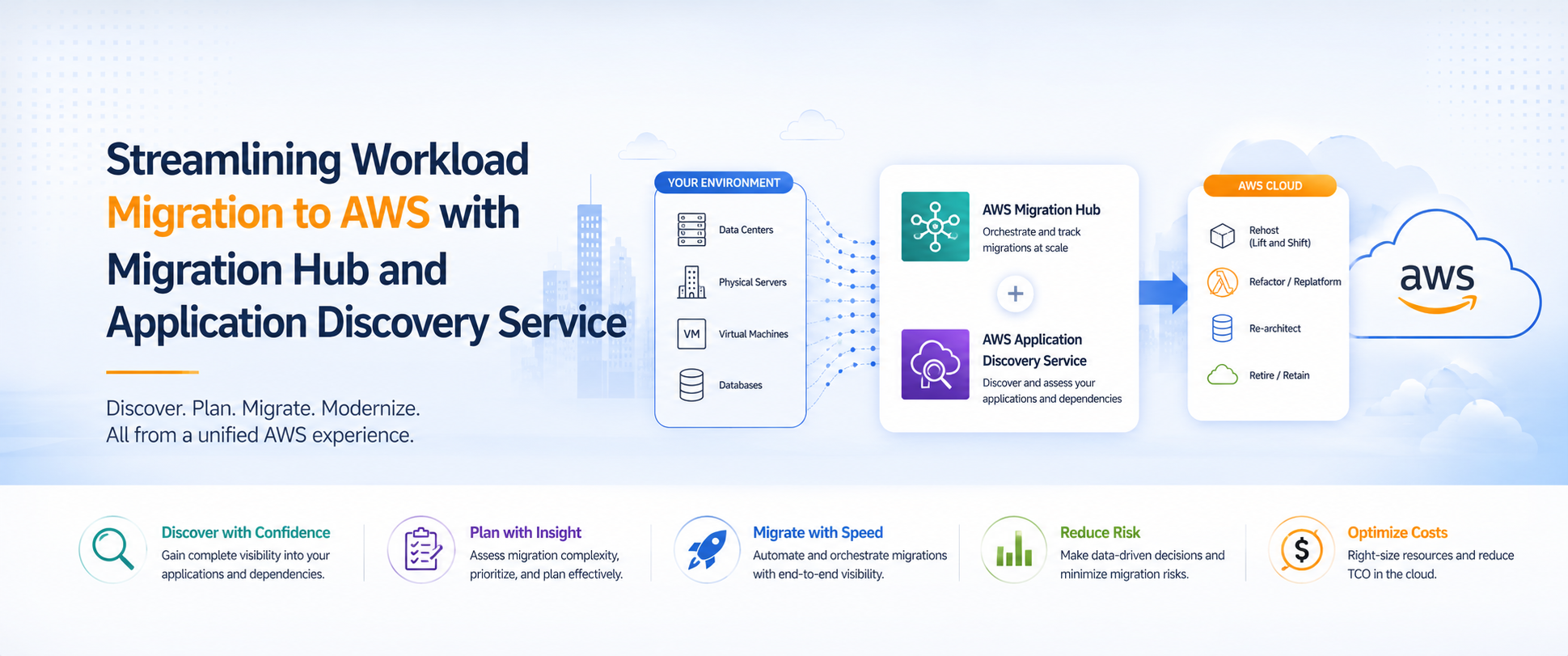
AWS Transform uses purpose-built AI agents — trained on nearly two decades of AWS migration data — to automate the tasks that used to consume the calendar:
- Discovery and dependency mapping. Agents scan the environment and use graph neural networks to infer how systems actually communicate — the dependencies the documentation missed.
- Wave planning. Migration wave plans that took analyst teams weeks are generated in minutes, sequenced by risk and dependency.
- Network conversion. On-premises VMware network configurations translated to AWS equivalents — VPCs, subnets, security groups — up to 80x faster than doing it by hand.
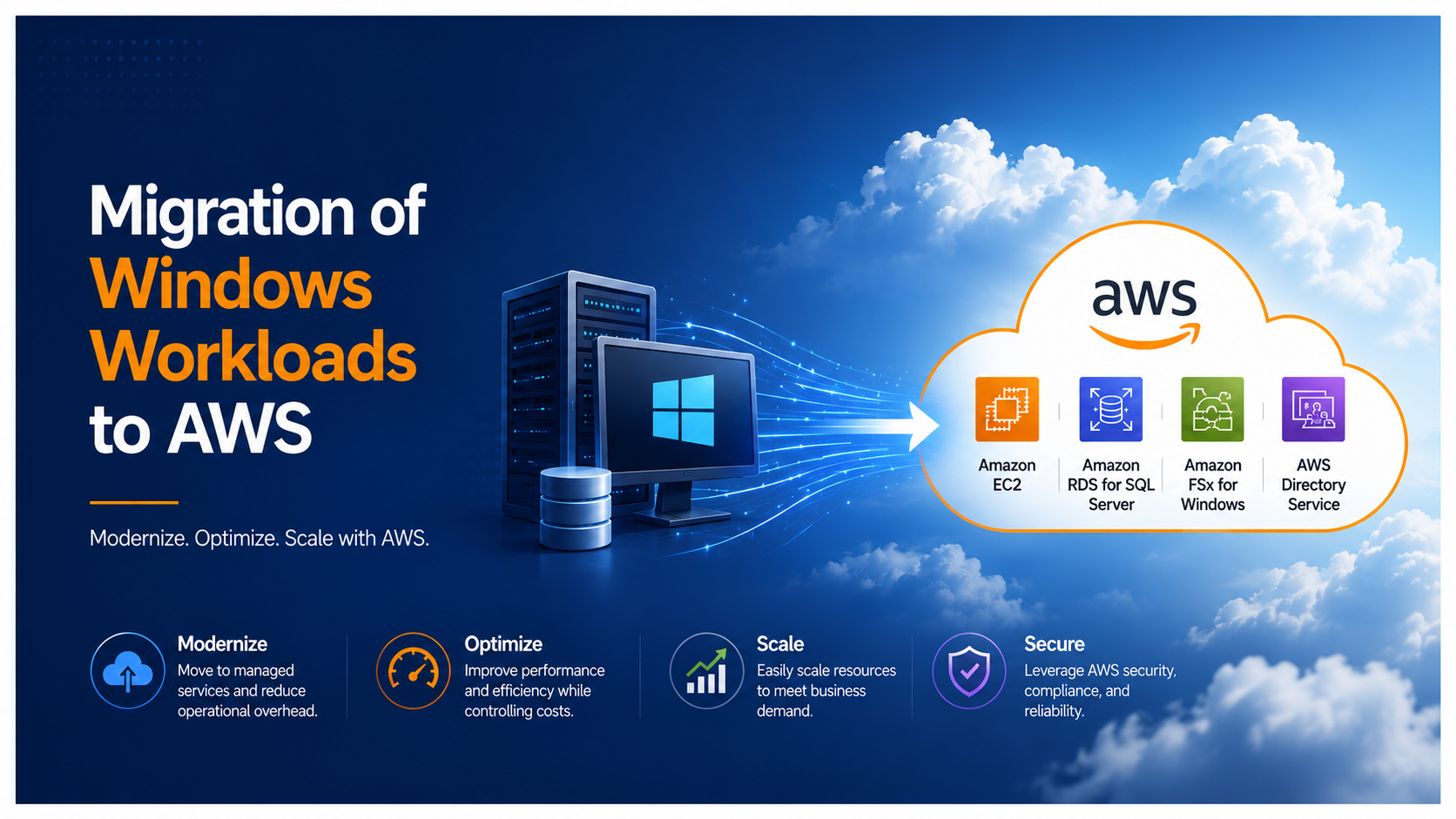
- Code transformation. .NET Framework applications ported toward cross-platform .NET on Linux, with dependency analysis, transformation, and test execution handled by the agent.
- Continuous modernization. Ongoing detection of tech debt, end-of-life dependencies, and drift — so modernization becomes a practice, not a one-time project.
This isn't a chatbot bolted onto a runbook. It's automation of the specific, high-effort analysis that made migration a multi-quarter slog. Compress that, and the whole timeline compresses with it — from quarters to weeks.
Why the Human 20% Matters More Now, Not Less
Here's the part the "AI replaces engineers" crowd gets exactly wrong.
When AI handles the tedious 80%, the remaining 20% isn't leftover busywork — it's the part that was always the most valuable and the least automatable. Judgment. Accountability. The edge cases. The business context an agent can't infer from a config file:
- Which workloads are politically or operationally sensitive and need a human-brokered cutover plan.
- Where a compliance requirement changes the "obvious" technical answer.
- When an AI-generated wave plan is technically correct but wrong for the business calendar.
- Who signs off, who gets notified, and who owns the rollback if something goes sideways at 2 a.m.
An AI agent will generate a migration plan with total confidence. That confidence is a feature and a trap. The failure mode of AI-accelerated delivery is trusting the output blindly — shipping the plan the agent produced without a senior architect asking "but does this actually fit your reality?" The teams that get burned are the ones who mistook a fast plan for a validated one.
This is why we frame our delivery model plainly: AI handles the scale. We own the stakes. The agents do the heavy lifting at machine speed. Our certified architects provide the context, validation, and accountability that turn a fast plan into a safe outcome. Neither half works without the other.
What This Looks Like in Practice
Abstractions are cheap, so here's a real one. When a customer's on-premises environment was hit by ransomware, the value of pairing automation with human-owned recovery wasn't theoretical — tier-one workloads were back online within 24 hours, 95% of a 75-server environment was recovered within three days, and zero ransom was paid because recovery came from clean, pre-infection snapshots. The tooling made the speed possible. The human playbook made the outcome trustworthy.
That's the pattern across everything we do: the tool provides velocity, the team provides judgment, and the customer gets an outcome they can actually rely on.
The Partners Who Win
The winners in AI-accelerated cloud work won't be the firms with the most bodies — the old "capability scales with headcount" model is exactly what agentic AI undercuts. And they won't be the firms with the loudest AI marketing, either. They'll be the ones who pair the tooling with the expertise to steer it, and who are honest about where the tool ends and judgment begins.
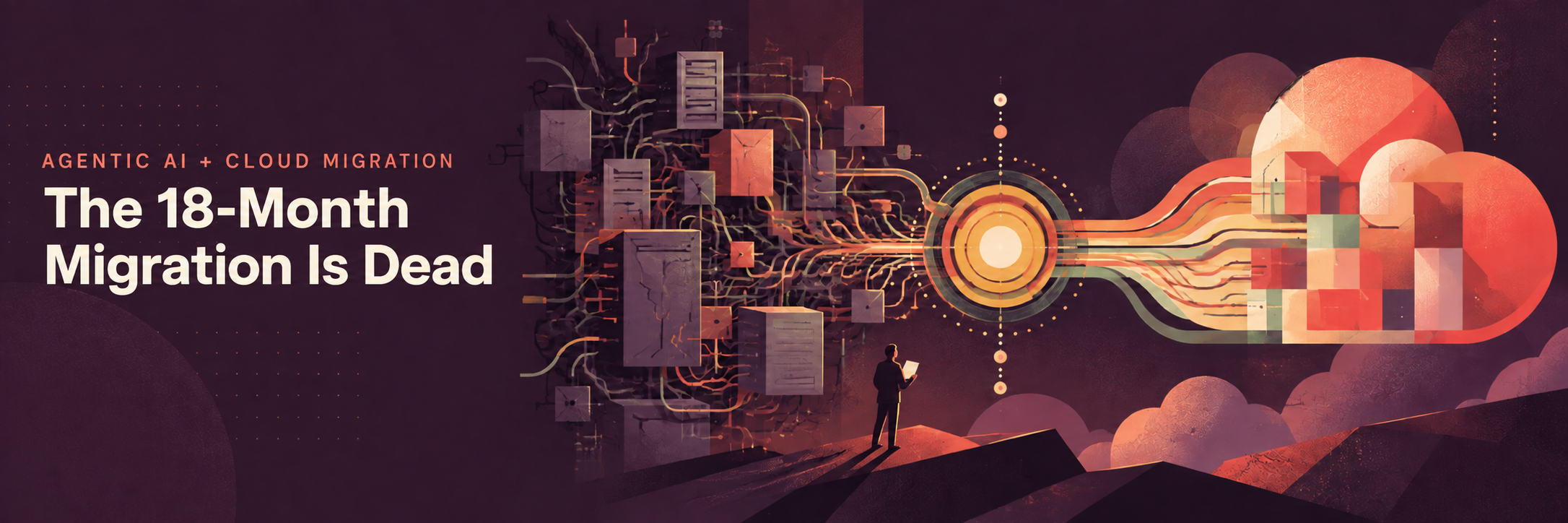
The 18-month migration is dead. What replaces it isn't "AI does it all." It's AI doing the scale, and experienced humans owning the stakes.
See how AI-accelerated migration works → or talk to an Atayo architect about compressing your path to AWS.
Tags
Atayo Group
AWS-certified cloud practitioners delivering end-to-end cloud solutions and services.
About Atayo →