
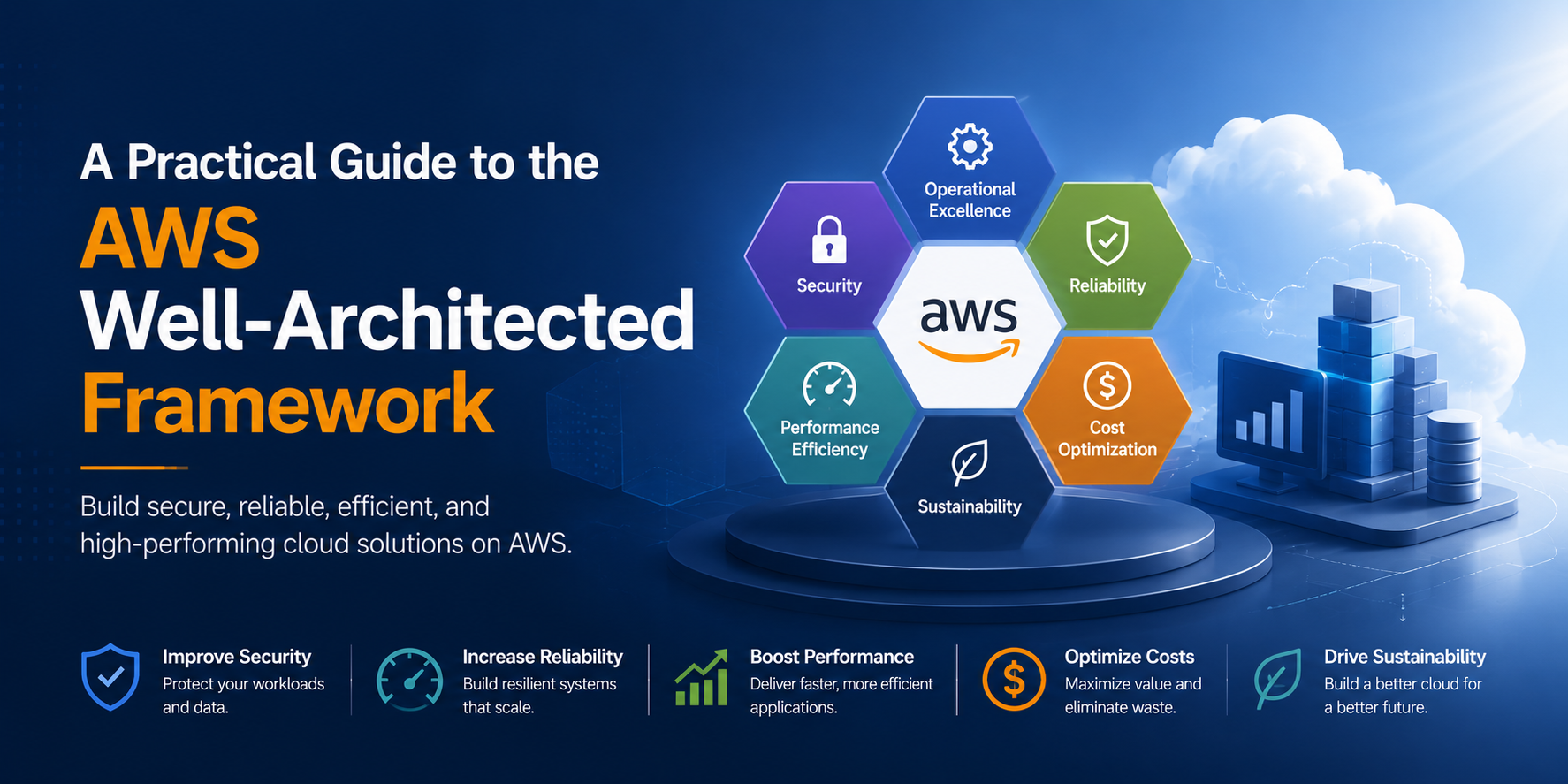
Amazon Web Services is a powerful platform — but it's only as powerful as your architecture makes it. The AWS Well-Architected Framework is one of the most valuable tools available to cloud practitioners, yet many organizations treat it as a one-time checkbox exercise rather than the continuous improvement engine it's designed to be.
In this guide, we break down each of the six pillars, walk through what a Well-Architected Review actually looks like in practice, and share the tangible outcomes our clients see when they put the framework to work.
What Is the Well-Architected Framework?
The AWS Well-Architected Framework provides a consistent set of best practices for evaluating cloud architectures. It gives teams a shared language for discussing architectural decisions and a structured approach to identifying risks before they become outages, security incidents, or runaway costs.
AWS makes the framework available through the Well-Architected Tool in the AWS Console, and authorized partners like Atayo can conduct official reviews on your behalf. As an AWS Well-Architected Partner, we use the prescriptive guidance of the framework to build secure, high-performing, resilient, and efficient infrastructure — providing a consistent approach that scales over time.
The Six Pillars
Operational Excellence
This pillar focuses on your ability to run and monitor systems to deliver business value and continually improve supporting processes and procedures. In practice, that means infrastructure-as-code, frequent small deployments, observability across your stack, and anticipating failure through runbooks and game days.
Key questions: Are deployments automated? Can your team respond to operational events without manual intervention? Do you have feedback loops that drive improvement?
Security
Security covers protecting information, systems, and assets while delivering business value through risk assessments and mitigation strategies. This means implementing least-privilege IAM policies, encrypting data at rest and in transit, enabling detective controls like AWS GuardDuty and Security Hub, and maintaining traceability across all actions in your environment.
Key questions: Are IAM policies scoped to least privilege? Is sensitive data encrypted everywhere? Can you detect and respond to security events automatically?
Reliability
Reliability addresses the ability to prevent and quickly recover from failures to meet business and customer demand. Multi-AZ deployments, automated backups, well-tested recovery procedures, and chaos engineering practices are core to this pillar. It's not just about uptime — it's about how gracefully your systems handle the unexpected.
Key questions: Can your workload survive an AZ failure? Are backups tested regularly? Do you have automated scaling to handle demand spikes?
Performance Efficiency
This pillar is about using computing resources efficiently to meet application requirements and maintaining that efficiency as demand changes. Right-sizing instances, leveraging managed services where appropriate, and continuously monitoring performance metrics keep your workloads running optimally without over-provisioning.
Key questions: Are your instances right-sized for actual usage? Are you using managed services where they make sense? Do you review performance metrics regularly?
Cost Optimization
Cost optimization helps you avoid unnecessary spend and affordably scale to meet business needs. Reserved Instances, Savings Plans, regular rightsizing reviews, and eliminating idle resources are the foundation. Our reviews typically uncover 15–30% in savings opportunities across these areas alone.
Key questions: Do you have visibility into what's driving your cloud spend? Are you using commitment-based discounts? Are there idle or over-provisioned resources running right now?
Sustainability
The newest pillar focuses on minimizing the environmental impact of running cloud workloads. This includes efficient resource utilization, selecting appropriate regions, and understanding the shared responsibility model for sustainability. As workloads grow, this pillar becomes increasingly important for organizations with ESG commitments.
Key questions: Are you running workloads in regions with lower carbon intensity? Are resources provisioned efficiently to minimize waste?
What a Well-Architected Review Looks Like
A review isn't a vague audit — it's a structured engagement with clear deliverables. Here's how we approach it at Atayo:
1. Workload Discovery
We identify and scope the workloads to be reviewed, gathering context on business criticality, architecture decisions, and current operational practices. This ensures the review is focused on what matters most to your organization.
2. Framework Review
Our AWS certified Professional Solution Architects conduct a deep-dive review across all six pillars, using the AWS Well-Architected Tool and structured questionnaires. This isn't a surface-level scan — it's a thorough examination of your architecture against AWS best practices.
3. Risk Identification
We surface High Risk Items (HRIs) and Medium Risk Items (MRIs) with clear explanations of the architectural gaps and their business impact. Each finding is contextualized — not just what's wrong, but why it matters and what could happen if it's left unaddressed.
4. Remediation Roadmap
You receive a prioritized remediation roadmap with actionable recommendations, effort estimates, and AWS service guidance for each finding. This isn't a report that sits on a shelf — it's a working document that drives real improvement.
What You Get Out of It
Organizations that go through a Well-Architected Review with Atayo consistently see four categories of outcomes:
Hidden risks surfaced — Architectural gaps identified before they become outages, security incidents, or compliance failures. Most teams have blind spots they don't know about until something breaks.
Reduced cloud spend — Cost optimization findings typically uncover 15–30% in savings opportunities across right-sizing, Reserved Instances, Savings Plans, and idle resources. The review often pays for itself in the first month of implementation.
Stronger security posture — IAM misconfigurations, unencrypted data, and network exposure identified and prioritized for remediation before they become vulnerabilities.
Accelerated modernization — The review output serves as a strategic roadmap to prioritize modernization investments with confidence, backed by AWS best practices rather than guesswork.
Getting Started
The best way to start is with a scoped Well-Architected Review on your most critical workload. We conduct complimentary initial reviews for qualified workloads — no commitment required, just a clear picture of where your architecture stands today.
Every review is led by AWS certified Professional Solution Architects, with findings mapped directly to AWS best practices and service recommendations. If you want to go further, we offer optional remediation engagements to implement the findings.
Tags
Atayo Group
AWS-certified cloud practitioners delivering end-to-end cloud solutions and services.
About Atayo →